Đăng ký nhận tin
Cảm ơn Quý khách hàng đã quan tâm đến An Huy Mỹ Việt.
Quý khách hàng vui lòng để lại thông tin liên hệ để chúng tôi hỗ trợ tốt nhất

Following a period of low interest rates aimed at supporting economic recovery and easing difficulties in the real estate market, mortgage interest rates unexpectedly surged to 14% per year in 2026. This development is raising concerns about the psychology and behavior of homebuyers, investors, and project developers, as well as its impact on market liquidity, especially since the real estate sector remains heavily dependent on bank credit.
Editor's note: As we enter 2026, the real estate market faces a new variable as lending interest rates show signs of rising sharply again after a period of maintaining low levels.
Since the beginning of the year, in official dispatches and meetings, the Prime Minister has emphasized the need to "manage monetary policy tools proactively, flexibly, promptly, effectively, and smoothly, without causing 'shocks' or 'abrupt changes,' and with a clear roadmap"; "strictly control speculative real estate credit, focusing on the actual housing needs of the people…".
However, in reality, despite some preferential policies such as credit packages for social housing, the adjustment of interest rates and credit flows into the real estate market is still being applied in a "one-size-fits-all" manner, lacking differentiation in terms of objectives, target groups, and product segments.
The reversal in interest rates occurred precisely when the real estate market had just undergone a period of legal deregulation and was beginning to show signs of supply recovery after the slump of 2022-2023, raising concerns about cascading consequences. The "pincer" of interest rates is poised to stifle liquidity, affecting investment activities, project development, and people's access to housing.
In a context where credit remains the primary source of capital dominating most market activities, the question is not just how to manage monetary policy, but rather the need to develop a comprehensive set of solutions combined with other tools and policies. Simultaneously, expanding and opening up other medium- and long-term capital channels becomes essential, while market participants must mature and learn to adapt to all possible scenarios.
Based on factual surveys, data analysis, and feedback from experts, businesses, brokers, and homebuyers, Reatimes is launching a series of articles titled "Credit for Real Estate: Cannot be Regulated in a 'Blank' Way ," aiming to paint a comprehensive picture of interest rate trends, their impact on the real estate market, and propose solutions for more stable and sustainable market development in the coming period.
We are pleased to introduce this to our readers!
According to reports from many commercial banks, the prevailing interest rate for real estate loans is currently in the range of 12-14% per year, an increase of 5-6 percentage points compared to the previous period in just a short time. Furthermore, for loans after the preferential period, the floating interest rate can even reach 15% per year.
At state-owned banks, which were expected to be a "safe haven," interest rate adjustments have shown a significant increase. According to an announcement from a Vietcombank branch in Ho Chi Minh City, the interest rate for loans to purchase apartments and townhouses with land use right certificates or sales contracts is currently at least 9.6% per year. In contrast, during the same period last year, the fixed interest rate at this bank was only around 6% for a 12-month term and 7% for a 24-month term.
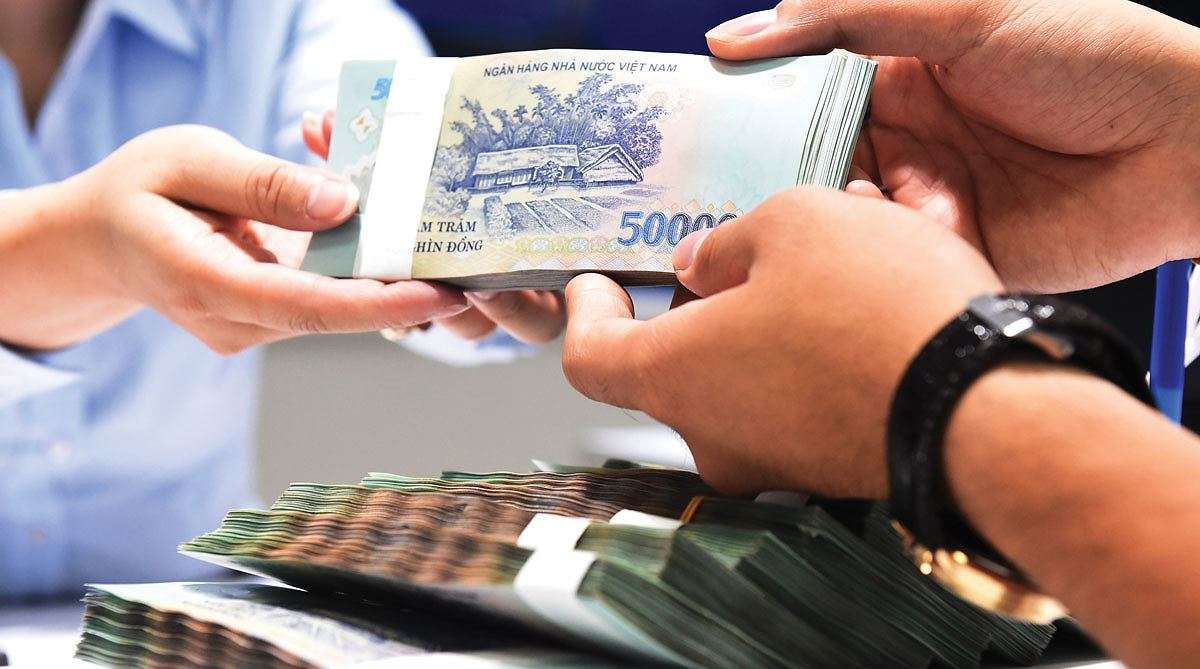
Entering 2026, mortgage interest rates unexpectedly surged to 14% per year. (Illustrative image)
Not only Vietcombank, but other state-owned banks have also significantly raised interest rates. VietinBank adjusted its fixed 24-month real estate loan interest rate to over 12% per year. BIDV applies a minimum interest rate of 9.7% per year for 6 months, 10% per year for 12 months, and can reach up to 13.5% per year if fixed for 18 months. Previously, similar loan packages at this bank only ranged from about 6.5% to 8% per year. Agribank still maintains lower short-term interest rates at around 8% per year for 6 months and 8.5% per year for 12 months, but also increased to nearly 9.8% per year if fixed for 18 months.
In the private banking sector, interest rates for home loans remain high. MB Bank applies interest rates of around 9-9.5% per year for fixed-term loans of 12-24 months. VIB ranges from 9.9-12% per year for the same term. ACB offers loans at approximately 9.5-10.5% per year, while Techcombank offers rates of around 8.5-9.5% per year for 6-12 month loan packages. Many other banks such as LPBank, BVBank, and Sacombank have also increased their average interest rates by 1.2-2 percentage points. Notably, floating interest rates at private banks currently range from 11-15% per year depending on the loan package and preferential period.
Looking back at market developments over the past five years, it's clear that mortgage interest rates in Vietnam have undergone several cycles of fluctuation. 2021 marked a period of exceptionally low interest rates, with banks offering numerous preferential loan packages ranging from 5.9% to 8.9% per year to stimulate consumption and support the economy amidst the Covid-19 pandemic.
By the end of 2022 and the beginning of 2023, interest rates began to rise again, commonly around 7-9% per year in the first year, then floating to 10.5-13.5% per year. Bank interest rates, combined with other influencing factors, pushed the real estate market into a prolonged slump. The market saw significant losses, deep discounts, and price reductions, not only among individual investors but also some project developers. Supply and liquidity decreased, forcing many businesses to temporarily suspend operations or cut staff and downsize.
By 2024-2025, in order to support economic growth and alleviate difficulties in the real estate market, many preferential credit packages were implemented, bringing home loan interest rates down to around 6-7% per year, significantly lower than in the previous period. In fact, these two years also recorded a clear recovery in supply and liquidity, although there was differentiation between segments and regions.
The sharp reversal continued as interest rates rose again in 2026, reaching 12-14% per year, nearly double the previous rate. If this situation persists, many fear that the real estate market, which is sensitive to interest rate fluctuations, will inevitably face far-reaching consequences.
Commenting on this development, Mr. Vo Hong Thang, Deputy General Director of DKRA Group, said that the pace of interest rate adjustments recently has been very rapid. Just about 4-5 months ago, many banks were still applying fixed interest rates around 6.5%/year, but this rate has continuously increased to 7.3%, 8.4%, 9%, 9.8%, and is currently commonly in the range of 13-14%/year.
Rising interest rates have significantly increased borrowers' financial obligations. Many have even had to postpone their home-buying plans. Before Tet (Lunar New Year), Mr. Vu Anh Minh (Dong Da Ward, Hanoi) planned to buy an apartment worth approximately 3 billion VND, borrowing 1 billion VND from the bank. With interest rates around 8% at the end of 2025, the monthly principal and interest payments would be approximately 10.7 million VND – an amount he could manage.
However, with interest rates now rising to 12%, the monthly payment has increased to 14.2 million VND, exceeding his financial capacity. "I'm forced to put my plans to buy a house on hold because the burden of interest is too great," Minh said.
This situation is causing many homebuyers to reconsider their financial plans. Nguyen Chi Kien, head of sales at a real estate brokerage firm in Hanoi, analyzed that with current interest rates, a 1 billion VND loan at 14% creates the same interest payment pressure as a 2 billion VND loan with a previous interest rate of only 6.5%. Kien stated that a cautious sentiment among buyers is spreading across the market. Many customers are delaying their consideration or temporarily suspending transactions to wait for more stable interest rates.
Despite the wave of rising lending interest rates, some banks are still advertising home loan packages with interest rates as low as 3.99% per year. For example, PVcomBank announced a promotional interest rate of 3.99% for the first three months, which can then increase to 12% per year. HSBC applies a rate of 5.5% per year for the first six months and floats up to over 10% per year after the promotional period ends.
Floating interest rates are based on a benchmark interest rate plus a margin of 3-4% per year. Without careful financial planning and preparation, homebuyers can easily fall into a cycle of heavy debt repayment pressure, with interest rates exceeding their ability to pay, and in many cases, even having to sell their property at a loss, as happened in 2022.
In reality, many homebuyers have begun to worry as the floating interest rate period approaches. Ms. Minh Trang (Vinh Tuy ward, Hanoi) bought a 45m² apartment on Duong Van Be street in mid-2025 for over 3.7 billion VND. At that time, she had about 1.5 billion VND in cash, and the rest was borrowed from the bank at a preferential interest rate of only about 6% per year in the first year. However, after six months, interest rates started to rise rapidly, causing her to worry about the loan when it entered the floating rate phase.
"I hope that interest rates will stabilize in the future, not be as high as they are now. If floating interest rates rise to 12-13%, the pressure to repay the debt will be immense, and I'm not sure I can cope," Ms. Trang shared.
To put it into perspective, a loan of 3 billion VND at a preferential interest rate of 4% per year would result in monthly installments of approximately 12-15 million VND. However, if the floating interest rate is 14-15% per year, the interest payment would increase to 25-30 million VND per month, a significant difference that could cause hardship for many families. Furthermore, buyers would face the burden of repaying double-digit interest rates for the remainder of the loan term, which typically spans 15-25 years.
According to Dr. Nguyen Tri Hieu, Director of the Institute for Research and Development of Global Financial and Real Estate Markets, in the context of sharply fluctuating interest rates, borrowers need to be more cautious when deciding to borrow to buy a house. "Borrowers should not only look at the initial preferential interest rate but also consider the floating interest rate after the preferential period. Without a long-term financial plan, the risk of significant debt repayment pressure will be very high," the expert advised.
Dr. Nguyen Tri Hieu said that to avoid falling into the cycle of floating interest rates, homebuyers need to pay attention to 5 principles: (1) Do not borrow more than 80% of the house value; (2) total monthly debt repayment should not exceed 50% of net income; (3) prioritize loan packages with fixed interest rates for as long as possible, at least the first 3-5 years; (4) maintain a reserve fund equivalent to 6-12 months of debt repayment; (5) create a detailed calculation table and simulate many scenarios of interest rate increases before deciding to borrow.
In the operational structure of the Vietnamese real estate market, bank credit has long played the role of the "main artery" of capital flow. When interest rates change, real estate is often one of the sectors that reacts earliest and most strongly, because most stages in the lifecycle of a project – from land financing obligations, site clearance, construction to product consumption – depend significantly on bank capital.
According to statistics from the Ministry of Construction, outstanding real estate credit has increased sharply from VND 1.56 trillion at the end of Q1 2025 to over VND 2 trillion by Q4 2025, an increase of nearly 28% in one year. Thus, real estate credit accounts for 24% of the total outstanding credit of the entire economy, meaning that for every four dong of credit, one dong flows into the real estate sector, while more than 20 other economic sectors share the remaining capital.
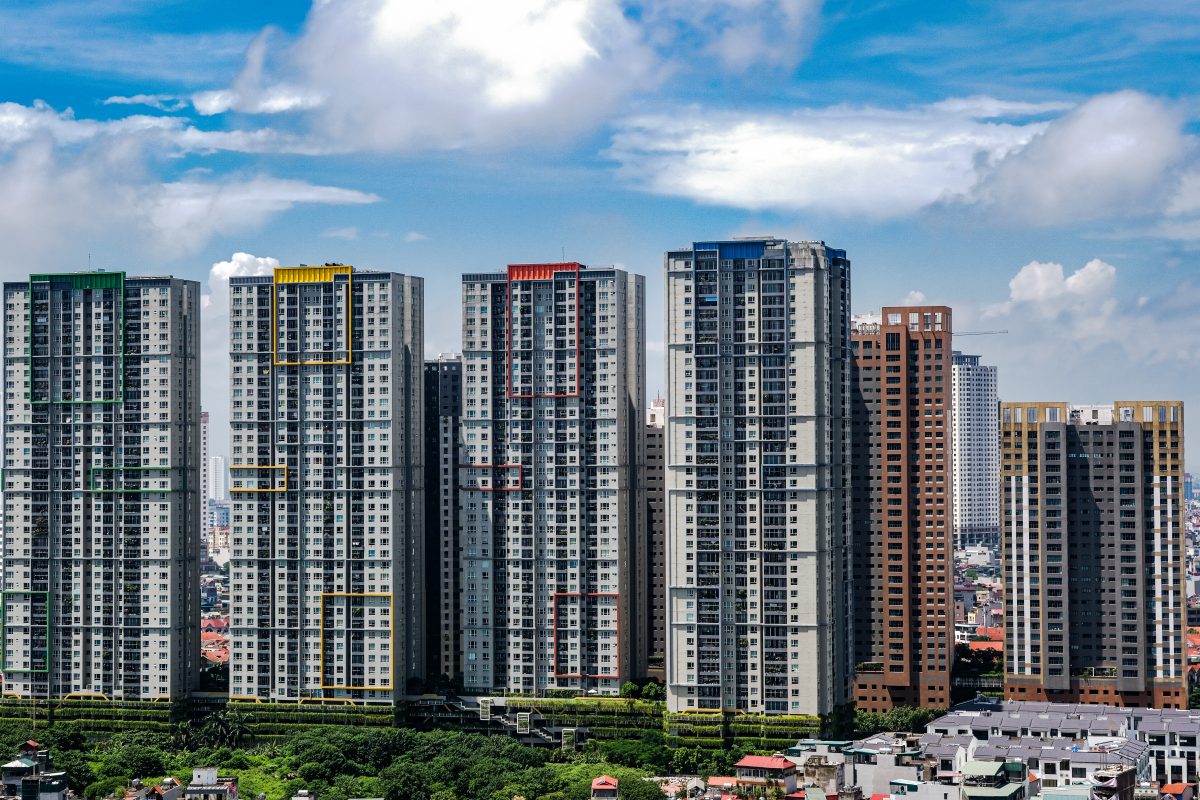
The credit growth rate over the past year also shows a rapid expansion of capital flows into real estate. ( Illustrative image: Bui Van Doanh)
Many statistics estimate that, including home loans, the scale of credit related to real estate could reach approximately 4.5 million billion VND by the end of 2025. From the perspective of the banking system, many credit institutions also maintain a proportion of real estate business loans at approximately 30% of total outstanding loans, reflecting a relatively large concentration of capital in this sector.
The credit growth rate over the past year also shows a rapid expansion of capital flows into real estate. In 2025, some banks recorded a surge in real estate business loans, such as VIB (up 270.2%), SeABank (up 120%), BVBank (up 102.4%), MB Bank (up 88.9%), and MSB (up 66.3%).
From the above figures, a close two-way relationship can be seen: Bank capital is the "lifeblood" nourishing the real estate market, while real estate remains a preferred lending sector for banks, thanks to collateral and the often smaller disbursement schedules.
Meanwhile, other expected capital channels such as corporate bonds, stocks, cryptocurrency exchanges, FDI, trusts, real estate investment trusts (REITs)... need a roadmap and time to achieve the expected results.
Therefore, in the short term, bank credit remains the primary source of capital for the real estate market. According to Dr. Nguyen Van Dinh, Vice President of the Vietnam Real Estate Association (VNREA) and President of the Vietnam Association of Real Estate Brokers (VARS), monetary policy management in this context requires particular caution and a clear roadmap. "Sudden or abrupt adjustments, especially to interest rates, can create a shock to the market. Lessons from previous periods show that whenever real estate credit is tightened across the board, the market often falls into a prolonged freeze, requiring significant time and resources to recover," Mr. Dinh stated.
Given these signs, many experts believe that interest rate fluctuations could have far-reaching ripple effects on the entire real estate ecosystem. According to Dr. Nguyen Van Dinh, if interest rates remain high for an extended period, the market risks facing a chain reaction: decreased liquidity, delayed project timelines, and increased financial pressure on both businesses and homebuyers.
Notably, these risks are emerging against the backdrop of a strong recovery in real estate supply after a period of stagnation. In 2024, the market recorded approximately 81,000 new products offered for sale, an increase of over 40% compared to the previous year, with an absorption rate of 72%. In 2025, supply is expected to continue accelerating, surpassing 100,000 products, with over 86,000 new products launched onto the market. In the first nine months alone, the market recorded approximately 58,000 successful transactions, double the number in the same period of 2024.
Looking ahead to 2026, according to the Ministry of Construction's forecast, supply is expected to continue to increase sharply as numerous legal obstacles are removed and many projects resume development. However, in the context of rising interest rates, the market's absorption rate becomes more difficult to predict.
Mr. Vo Hong Thang, Deputy General Director of DKRA Group, said that from the end of 2025, high interest rates have begun to significantly impact buyer sentiment. "Many customers are delaying their consideration or postponing their decisions to make a purchase. Workers' incomes are not keeping pace with the rate of interest rate adjustments, while debt repayment obligations are increasing. Even customers with genuine housing needs are becoming more cautious," Mr. Thang said.
Not only are homebuyers under pressure, but real estate businesses are also facing increasingly expensive capital costs. Financial reports for 2025 from several real estate companies show that many loans are subject to interest rates as high as 14-15% per year. Rising capital costs not only narrow profit margins but also force businesses to adjust their financial plans and even restructure product pricing to offset costs.
According to Dr. Nguyen Van Dinh, after the difficult period of 2022-2023, many businesses had to sell off assets, transfer projects, or downsize their operations. Therefore, there is not much room for maneuver left now. If interest rates remain high and credit is tightly controlled, the risk of cash flow disruption could become a real challenge for many businesses.
"Rising financial costs will directly impact the developer's ability to implement projects and launch sales plans. Meanwhile, individual investors will also be forced to scale back their investments or postpone their real estate purchase plans," Mr. Dinh analyzed.
In this context, the question arises: Why are interest rates trending upwards again? What scenarios could unfold for the real estate market if interest rates remain at their current high levels?
The current market context and key scenarios to consider will be analyzed in detail in Part 2: Where is the real demand in the real estate credit landscape? We invite readers to read on!
Communications by An Huy Group
Cảm ơn Quý khách hàng đã quan tâm đến An Huy Mỹ Việt.
Quý khách hàng vui lòng để lại thông tin liên hệ để chúng tôi hỗ trợ tốt nhất