Đăng ký nhận tin
Cảm ơn Quý khách hàng đã quan tâm đến An Huy Mỹ Việt.
Quý khách hàng vui lòng để lại thông tin liên hệ để chúng tôi hỗ trợ tốt nhất
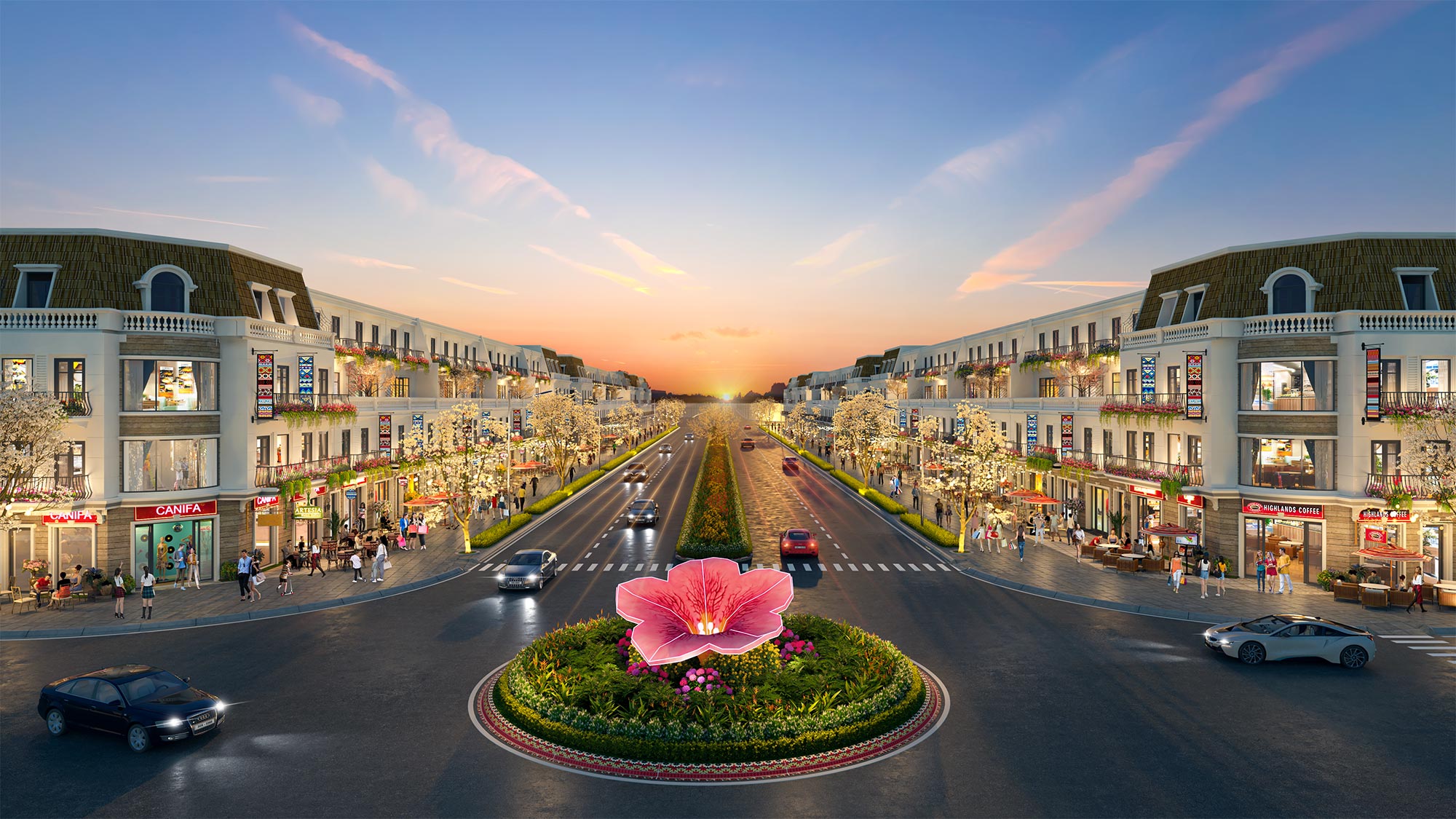
The expansion of administrative boundaries and the strategic reallocation of public investment are quietly yet decisively driving a major transformation across the Northwestern gateway. Following the administrative merger, the newly established Duc Lap area-comprising Duc Lap Ha Commune, My Hanh Bac Commune, and part of the former Duc Hoa Thuong Commune-with a total area of over 59 square kilometers and a population exceeding 31,000, has officially entered a new phase of development under Tay Ninh Province's evolving infrastructure network and policy framework. This pivotal transformation is not only reshaping the region's demographic landscape but also directly triggering a new valuation cycle for the entire local real estate market. Entering the second half of 2026, the area is increasingly taking shape as a model satellite urban center, well positioned to capture the growing migration from the urban core of Ho Chi Minh City, supported by highly competitive property prices and the rapid completion of project legal procedures.
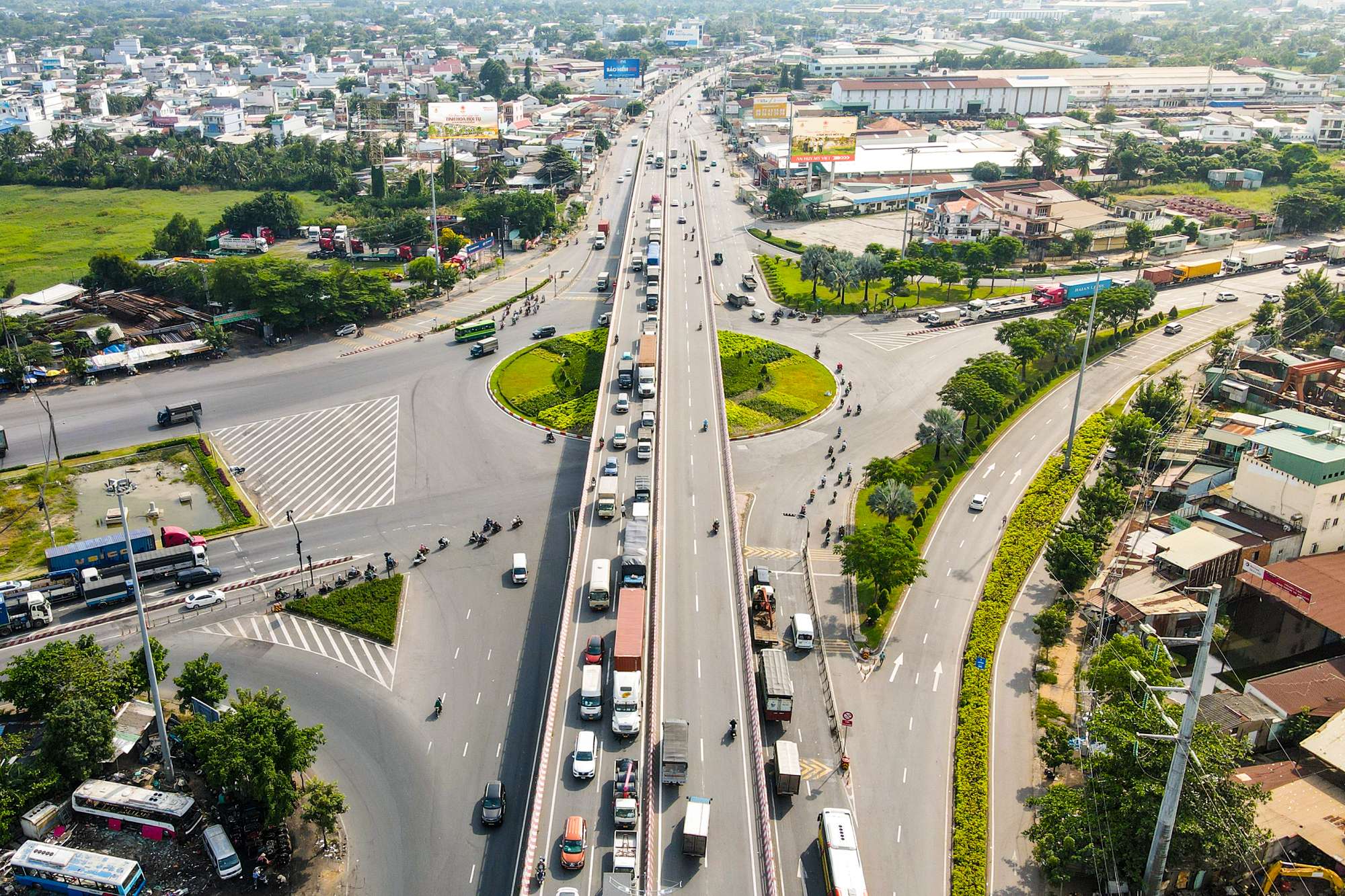
Source: Internet. National Highway 1, from the An Lac Roundabout to the Long An boundary, will be expanded to 10–12 lanes with a total investment of over VND 15 trillion.
The driving force behind this transformation stems from the strategic vision of regional policymakers. In late May 2026, the Tay Ninh Provincial People's Committee officially approved the preparation of the Master Plan for the New Duc Hoa Urban Area, encompassing seven key communes, with Duc Lap designated as the administrative and economic core.
The roadmap to upgrading Duc Hoa into a Class III urban area and establishing its subordinate wards is currently in its final stages, with the relevant authorities expediting the remaining procedures. Assessing the impact of this policy momentum, a specialized report by the Vietnam Institute for Real Estate Research indicates that areas undergoing an administrative transformation consistently demonstrate the strongest growth potential. This is primarily because public investment is strategically prioritized to develop essential urban infrastructure, creating favorable conditions for major developers to launch projects and laying the foundation for sustainable property value appreciation driven by genuine end-user demand.
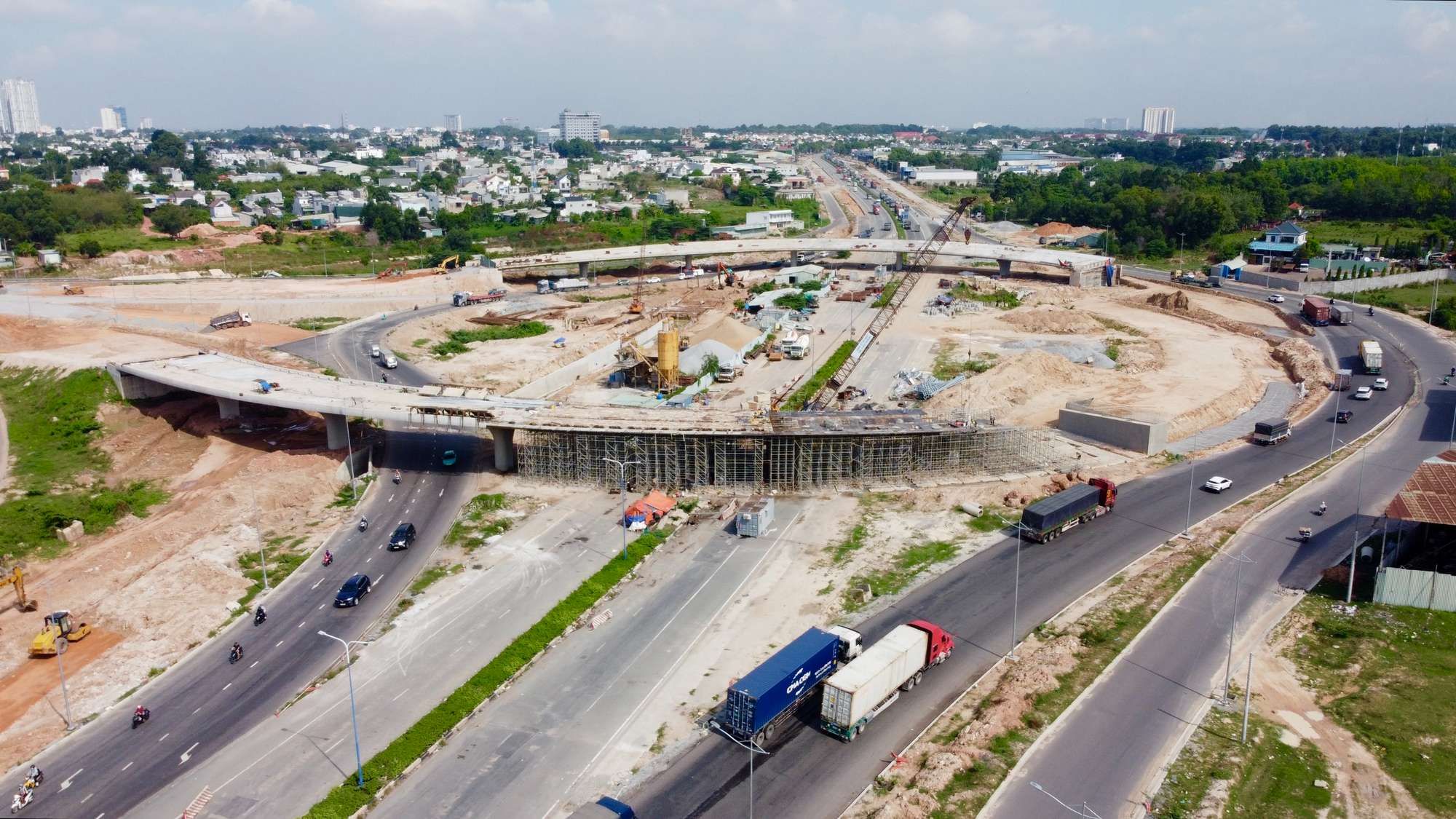
Source: Internet. The Binh Chuan Interchange is gradually taking shape along Ho Chi Minh City's Ring Road 3.
The most visible impact of public investment is taking shape through the extensive transport infrastructure projects progressing rapidly in the second half of 2026. A strategic 7.5-kilometer roadway crossing Provincial Road 9, stretching from the Osaka Lake area through vibrant residential communities and extending directly toward Linh Thanh Pagoda, is now entering its final asphalt paving phase. At the same time, land acquisition and site clearance for feeder roads, including the Ut Chuoi corridor and internal connecting routes in Tram Lac Hamlet, have recorded significant progress thanks to strong community support. The removal of these long-standing transportation bottlenecks has substantially reduced travel time from key industrial parks to the center of Ho Chi Minh City. Supported by an increasingly integrated regional transportation network, the area is emerging as a magnet for the workforce and professionals seeking a more spacious living environment while maintaining convenient daily access to their workplaces.
This wave of suburban migration is unfolding faster than anticipated as rising living costs and soaring property prices in central Ho Chi Minh City have moved beyond the financial reach of most young families. Amid this outward migration trend, Duc Lap holds a significant competitive advantage thanks to its strategic location, bordered by the key arterial routes of Provincial Roads DT824 and DT825, while being adjacent to several large-scale urban developments where technical infrastructure is gradually taking shape. According to market analysis by the real estate technology platform Nha Tot in the third quarter of 2026, searches for freehold land plots, completed townhouses, and properties capable of generating rental income in the area increased by 30% to 45% year-on-year. Today's homebuyers are also redefining their priorities, favoring locations that offer greener living environments, well-connected infrastructure, and strong potential for long-term capital appreciation, rather than remaining in the densely populated inner-city neighborhoods.
Recognizing this shift in market demand, financially strong developers have moved swiftly to reshape the supply landscape with large-scale, well-planned projects. Most recently, the Tay Ninh Provincial People's Committee approved the investment policy for a 187-hectare residential township in Duc Lap, with a total investment exceeding VND 12 trillion. The project is planned as a modern urban development, featuring a comprehensive mix of commercial townhouses, self-built residential land plots, and social housing, complemented by an integrated system of schools, healthcare facilities, and green parks. The emergence of these landmark developments, together with fully serviced residential communities that have completed infrastructure and are eligible for land-use rights transfers-such as the An Huy My Viet project, comprising more than 2,200 products-is fostering a vibrant property market while effectively replacing the fragmented, informally subdivided land segment with unclear legal status that once dominated the area.
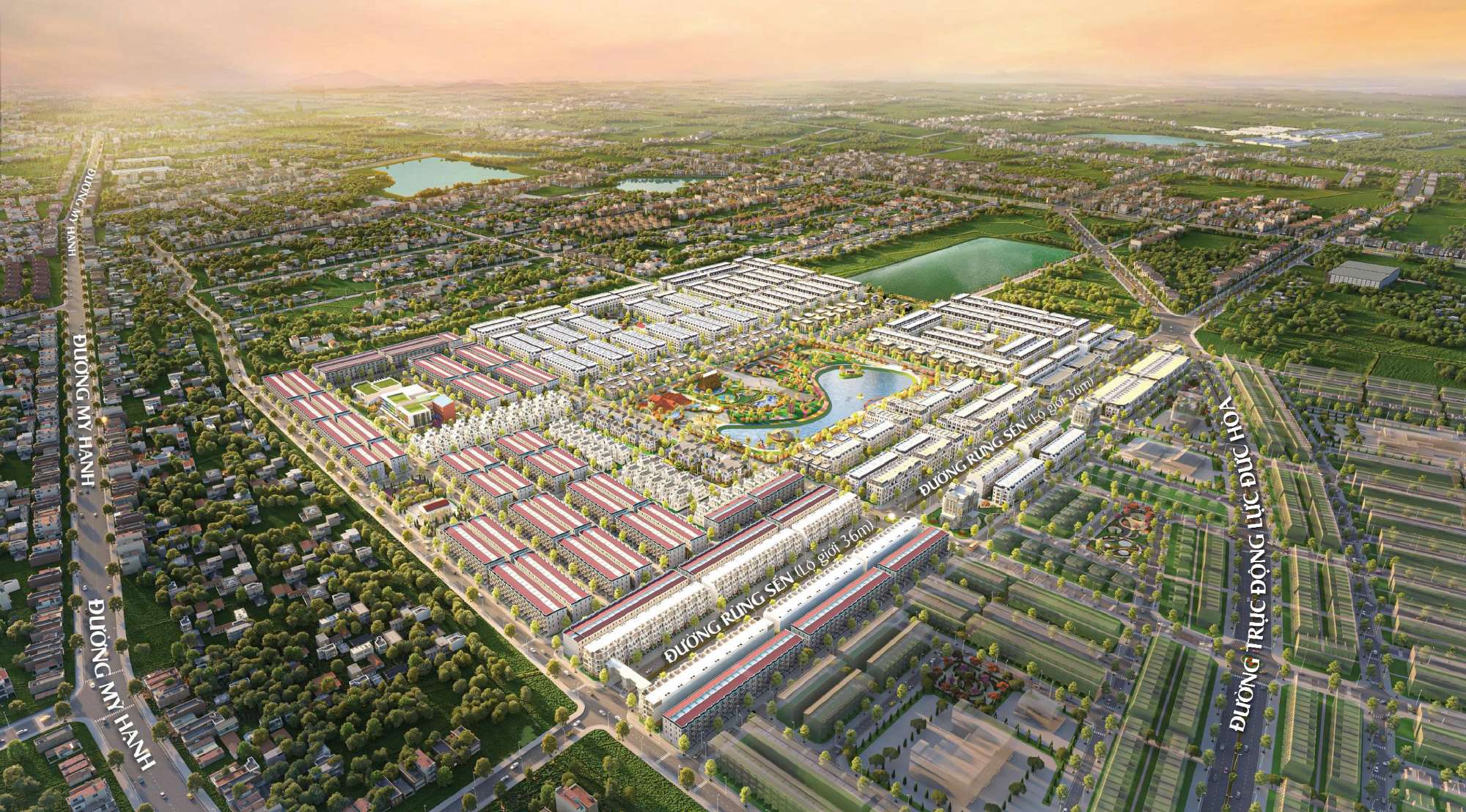
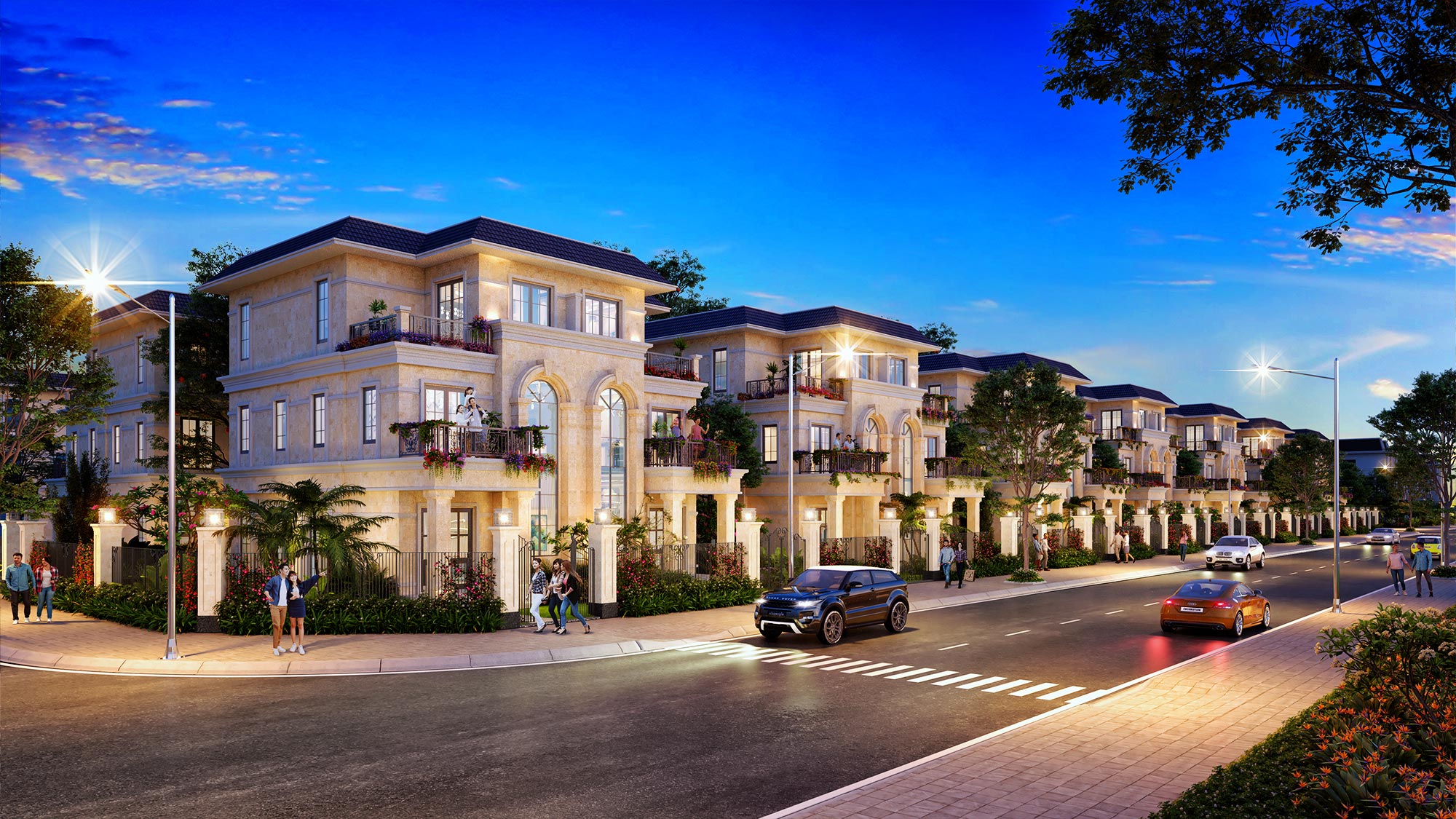
Source: Internet. Perspective rendering of the An Huy My Viet project in Duc Lap Commune, Tay Ninh Province.
The emergence of model urban developments is establishing a new pricing benchmark that more accurately reflects the added value generated by infrastructure improvements and genuine market demand. According to an in-depth analysis published by financial news platform The Leader, selling prices at well-planned real estate projects in Duc Lap have reached approximately VND 21 million per square meter, representing an increase of around 78% compared to the 2024 cycle. Despite this strong appreciation, experts from the Vietnam Association of Realtors believe that current prices remain within a "value zone," as they are still only a fraction of those in neighboring administrative areas of Ho Chi Minh City. The inflow of investment from leading real estate developers into infrastructure development, combined with the rapid construction progress of interprovincial transport corridors, is creating a powerful dual growth driver, providing a solid foundation for sustainable and secure investment returns.
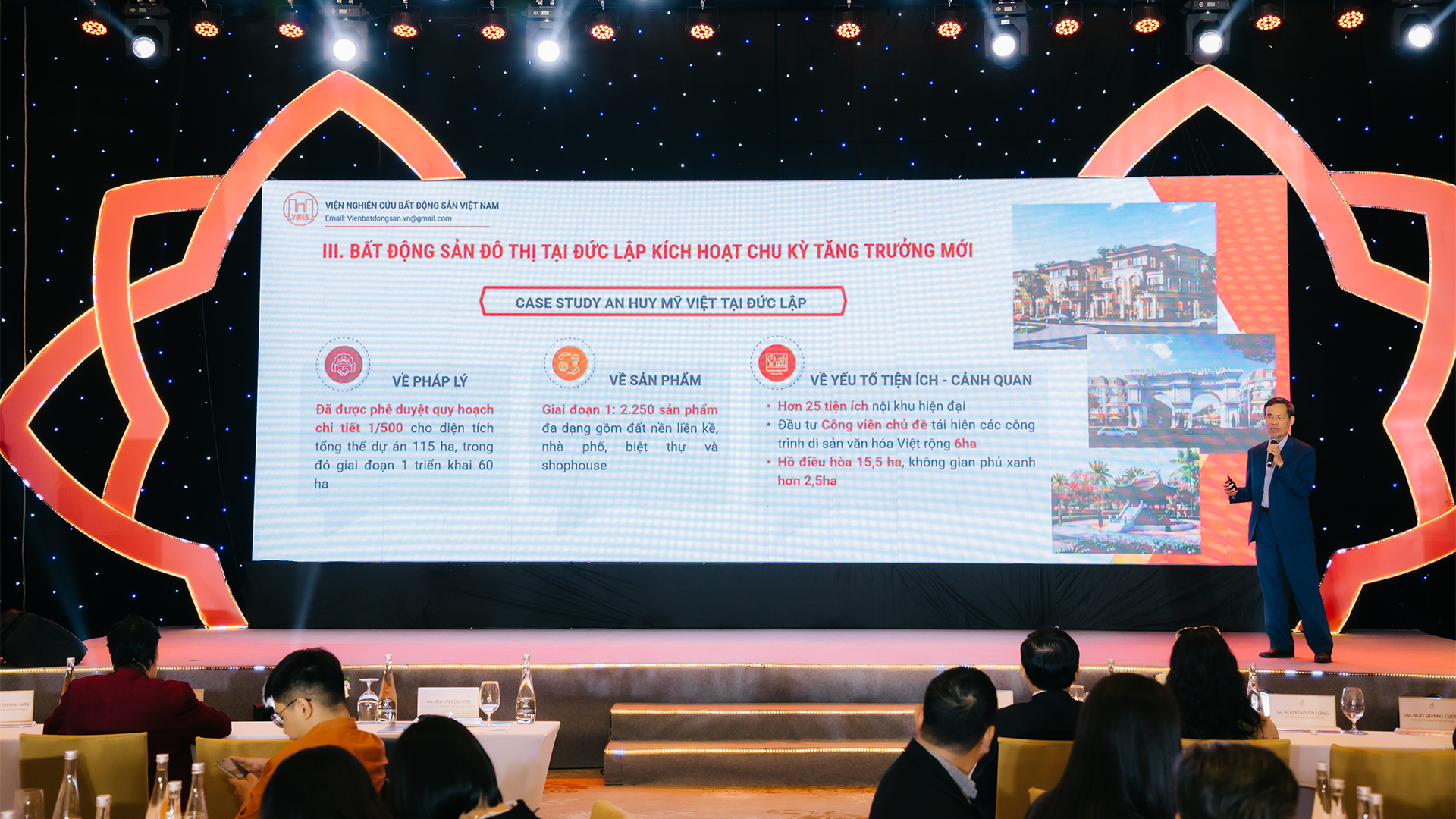
Source: Internet. Mr. Bui Van Doanh, President of the Vietnam Institute for Real Estate Research, shares his insights on investment trends and opportunities in Duc Lap, Tay Ninh.
Looking at the overall market outlook for the second half of 2026, industry observers anticipate a clear divergence in both liquidity and asset values across Duc Lap. Residential land plots and townhouses located along major roads with planned rights-of-way of 25 to 30 meters-such as the Tan Hoi corridor-are expected to lead the market, with price increases projected at 15% to 25% once key transport infrastructure projects become operational toward the end of the year. From a lower-risk investment perspective, small residential land plots situated within established neighborhoods around Tram Lac Hamlet-identified as the future administrative center-are also expected to maintain steady appreciation of 10% to 15%. At this stage, the market is driven by genuine end-user demand and long-term investors rather than speculative activity, fostering a transparent, sustainable, and fundamentally healthy investment environment.
Duc Lap's transformation from a former semi-industrial area into a new urban growth engine of Tay Ninh Province is no longer a vision for the future-it is being realized through tangible infrastructure milestones achieved week by week. The final months of 2026 present a timely opportunity for discerning investors to strategically allocate capital toward properties with individual land ownership certificates, transparent legal status, and prime locations along key planning corridors. Owning a real asset that is well positioned to benefit from this historic wave of population migration represents a strategic move to maximize long-term returns while building a resilient and sustainable investment portfolio.
Communicated by An Huy Group
Cảm ơn Quý khách hàng đã quan tâm đến An Huy Mỹ Việt.
Quý khách hàng vui lòng để lại thông tin liên hệ để chúng tôi hỗ trợ tốt nhất